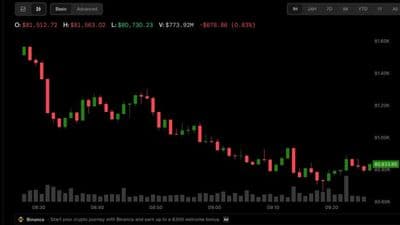
James Thorne, chief market strategist at Wellington-Altus Private Wealth, told a panel that Bitcoin is embarking on a generational rally that eclipses its usual four-year rhythm. Drawing from his background in commodities, he highlighted structural shifts that set this period apart from prior Bitcoin cycles.
Market context and commodity parallels
Thorne compared the current Bitcoin environment to the tail end of a commodities supercycle, noting that the same macro forces that once drove oil and metals are now influencing digital assets. He pointed to recent Consumer Price Index data that showed shelter costs, rather than energy, as the primary inflation driver, suggesting a broader real-asset demand surge. This backdrop, he argued, creates a fertile ground for Bitcoin to act as a hedge against inflationary pressures.
The four-year cycle has run its course
Historically, Bitcoin has exhibited a roughly quadrennial pattern of price peaks and troughs. Thorne contended that this cadence has concluded, citing changing market dynamics such as heightened institutional participation and the emergence of new financial products. He also observed that hedge funds are behaving like the “bond vigilantes” of earlier eras, scrutinizing monetary policy and seeking alternative stores of value, which he believes accelerates Bitcoin’s ascent.
Implications for investors and broader markets
According to Thorne, the convergence of AI-driven analytics, a potential “Greenspan moment” in policy, and the tokenization of assets could amplify Bitcoin’s volatility in a way that attracts sophisticated capital. He suggested that Bitcoin’s ability to settle transactions efficiently positions it as a viable counterpart to gold, potentially allowing its market capitalization to overtake the traditional safe-haven metal. The strategist emphasized that investors should consider Bitcoin’s role as pristine collateral and a hedge within diversified portfolios.
Why it matters
If Thorne’s assessment proves accurate, Bitcoin could experience a prolonged expansion phase that reshapes its relationship with other asset classes. A break from the four-year cycle would signal a maturing market, while the prospect of surpassing gold’s market cap would elevate Bitcoin’s status as a global store of value. Such a shift would have wide-reaching effects on portfolio construction, regulatory scrutiny, and the overall perception of digital assets in the financial system.