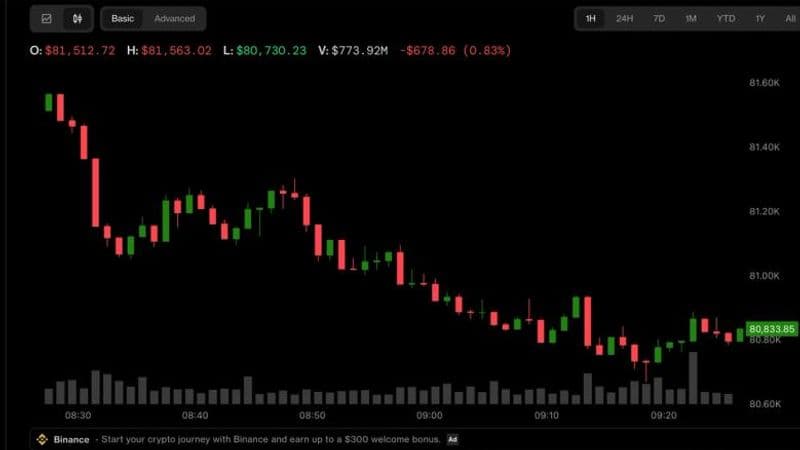
Bitcoin slipped beneath the $81,000 threshold on Thursday, retreating about 1% since the start of the UTC day. The cryptocurrency briefly touched $80,000 on Wednesday before a short rally to roughly $81,500 was erased during Asian trading hours. Overall, the digital asset has lost more than 2% in the preceding 24-hour window.
Macro backdrop
U.S. consumer-price figures released on Wednesday showed a 3.7% year-over-year rise for the 12-month period ending in September, exceeding the 3.4% reading a month earlier and outpacing analyst forecasts. Core CPI, which strips out food and energy, climbed to 2.6% from 2.4% the prior month. The hotter inflation print rekindled worries that the Federal Reserve might keep interest rates elevated longer than markets had anticipated.
Prediction markets reacted quickly. On Polymarket, the perceived probability of an October rate hike briefly spiked toward 50% before settling near 30%. CME’s FedWatch tool displayed a similar trajectory, jumping from roughly 22% to almost 47% and then easing to about 26% at the time of writing.
Institutional dynamics
Liquidity and risk appetite appear strained. Spot Bitcoin exchange-traded funds in the United States recorded net outflows of $150.5 million on October 14, reversing a prior day’s inflow of $175.7 million. Market-making firm STS Digital noted that the prevailing uncertainty could suppress liquidity across asset classes. Their analyst, Anderson, suggested that while the next Federal Open Market Committee decision remains uncertain, the odds favor a hold on rates, with more than 70% probability of a status-quo outcome according to CME futures data.
Market ripple effects
Traditional equity markets mirrored the risk-off sentiment. Nasdaq futures fell about 1%, extending a prior 2% slide, while South Korea’s KOSPI plunged 8% and triggered circuit-breaker mechanisms. Other leading cryptocurrencies also slipped, with ether trading near $2,370 and assets like XRP and Solana declining between 3.5% and 4%. The sole top-100 token posting gains was PYTH, up over 7%.
Why it matters
Bitcoin’s dip underscores the sensitivity of digital assets to macroeconomic signals, especially inflation and monetary-policy expectations. The combination of heightened rate-hike speculation and waning institutional inflows adds pressure on liquidity, potentially influencing price stability across the broader crypto ecosystem. Traders and investors will be watching upcoming Fed communications closely, as further clues on interest-rate trajectories could shape market direction in the weeks ahead.