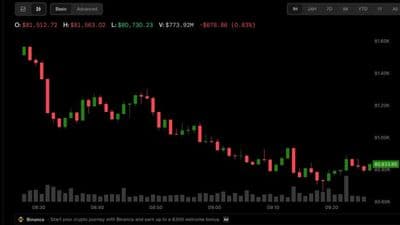
Analysts argue that a tangible advance in quantum computing could become a significant upside driver for Bitcoin. If the technology reaches a point where current cryptographic assumptions are challenged, market participants may view Bitcoin as a hedge against systemic risk, prompting fresh buying pressure. Other scenarios mentioned include a decisive shift in Federal Reserve policy, a large-scale purchase of Bitcoin by the U.S. government, or an unexpected fiscal stimulus that redirects capital toward digital assets.
Institutional Momentum via ETFs
Exchange-traded funds that hold Bitcoin have become the primary conduit for institutional capital. The steady inflow of assets through these vehicles is credited with keeping the market’s foundation solid, even as traditional treasury-style investors stay on the sidelines. By aggregating demand from pension funds, endowments and other large players, ETFs create a persistent source of liquidity that can support higher price levels.
Hash Rate Trends
The network’s hash rate has continued to climb, a metric many interpret as a sign of miner confidence and network security. Proponents point to the “hash ribbons” – periods where the hash rate accelerates faster than price – as a bullish indicator. The recent acceleration appears to be linked to the integration of artificial intelligence tools that optimize mining hardware performance, suggesting that the hash rate cycle may be entering a new phase.
Economic Backdrop
Global liquidity conditions remain unusually generous, with central banks maintaining near-zero to modestly positive rates. However, a potential rise to around five percent in major economies could reshape risk appetite. In such an environment, Bitcoin’s scarcity and store-of-value narrative may become more attractive, especially if traditional assets face higher financing costs.
Quantum and AI Risks
Beyond the upside potential, there is concern that superintelligent AI could eventually compromise Bitcoin’s cryptographic safeguards. While current AI systems are far from breaking SHA-256, the theoretical risk is enough to keep the conversation alive among researchers. A clear roadmap outlining when quantum computers might pose a real threat could act as a catalyst, prompting pre-emptive positioning by investors.
Why it matters
Understanding the mix of technological, institutional and macroeconomic forces is essential for gauging Bitcoin’s trajectory. A credible quantum breakthrough, sustained ETF inflows, and a robust hash rate together build a foundation for higher valuations, while shifts in monetary policy and emerging AI threats add layers of uncertainty that could accelerate market movements. Stakeholders who monitor these variables will be better positioned to anticipate the next phase of Bitcoin’s price evolution.