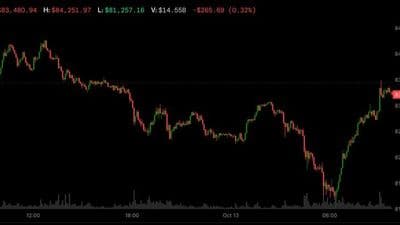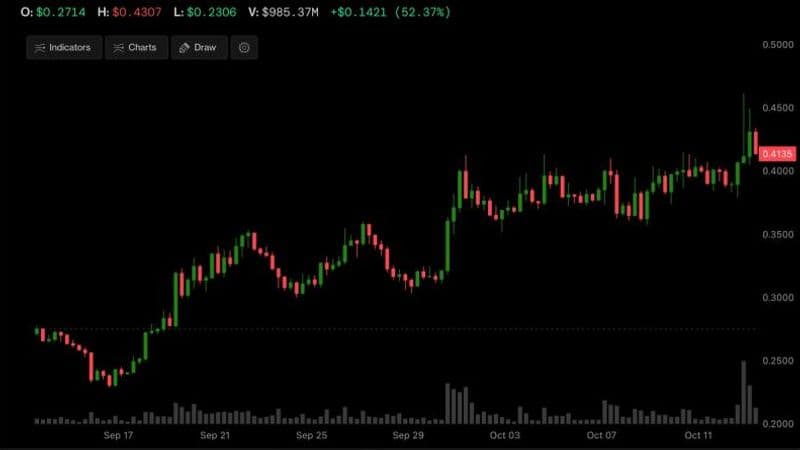
STX, the native asset of the Bitcoin-layer-2 platform Stacks, has posted a sharp rally, climbing close to 10% in the last 24 hours, about 14% over the past week and more than 50% since the start of the month. The gain outpaces Bitcoin, which is trading near $83,700, as well as major altcoins such as Ether and XRP.
Non-custodial Bitcoin staking model
Stacks distinguishes itself by allowing Bitcoin holders to stake their coins directly on the Bitcoin blockchain while keeping full control of private keys. Traditional yield-earning methods often require users to convert BTC into wrapped tokens or move assets across bridges, exposing them to additional risk. Stacks’ design avoids these steps, offering a purely on-chain staking experience.
Bonding Period 3 and its impact on supply
The protocol’s next bonding phase, dubbed “Bonding Period 3,” begins in November. Participants must lock a specific amount of STX alongside their Bitcoin, roughly equivalent to 5% of the Bitcoin value they are staking. This locked STX is removed from the market for the duration of the period, creating a scarcity effect that can support higher prices. Earlier bonding phases were used to transition signers and seed liquidity; the current phase deepens the link between Bitcoin liquidity and STX scarcity.
Market backdrop and investor sentiment
The rally occurs amid broader market volatility, with major cryptocurrencies showing choppy price action. Analysts are also watching upcoming U.S. CPI data, which could shape expectations for Federal Reserve policy and, by extension, risk appetite in crypto markets. The strong performance of STX, alongside other midsize gainers such as BDX, REDNER and PYTH, suggests a shift of liquidity toward assets offering novel utility rather than pure speculative exposure.
Why it matters
STX’s price acceleration underscores growing demand for Bitcoin-centric financial products that preserve custody. By coupling Bitcoin staking volume with a systematic lock-up of its own token, Stacks creates a feedback loop that can tighten supply and potentially sustain price appreciation. The development also signals that investors are seeking alternatives to wrapped Bitcoin solutions, which could influence the design of future layer-2 protocols on Bitcoin and beyond.