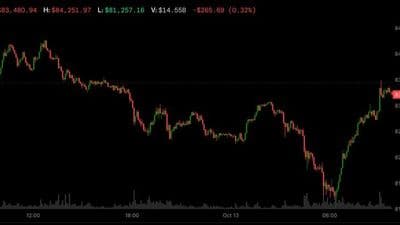
Crypto-related equities opened the week in the red but managed a modest bounce after Monday’s sell-off. Bitcoin traded around $83,400, a 3.2% decline from its weekly high near $87,000. The Crypto Fear & Greed Index slipped to a neutral 56, down from 67 a week earlier.
Asset price movements
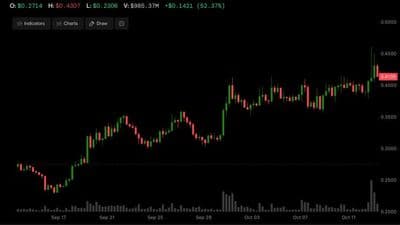
Altcoins bore the brunt of the downturn. Over the last seven days Solana fell 11%, HYPE and Dogecoin each slipped 12%, XRP dropped 10% and Ethereum lost 8%. Only four of the top-100 coins posted gains, with Stacks (+9%) leading the small-cap rally.
Macro backdrop
Analysts linked the pullback to broader market factors rather than crypto-specific news. Brent crude traded close to $110 a barrel after earlier spikes above $101, while the 30-year U.S. Treasury yield hovered near 5.6%, its highest level since 2002. The 10-year yield sat at about 5.24%. Upcoming U.S. CPI data on Wednesday could further sway risk appetite; a softer print might ease yields, whereas a hotter reading could reignite rate-hike concerns.
ETF and institutional activity
Spot Bitcoin ETFs experienced a net outflow of roughly $451 million for October, and Ethereum-focused ETFs saw about $720 million leave the same period. Daily outflows continued, with $65 million exiting Bitcoin ETFs and $85 million leaving Ethereum ETFs on Monday alone. Meanwhile, the crypto investment firm Strategy purchased 250 BTC for $21.5 million at an average price of $86,194, and Bitmine acquired 12,532 ETH for roughly $32 million, now holding about 4.9% of all Ether.
Regulatory and infrastructure updates
The CFTC announced that prediction-market contracts will be treated as swaps, moving them under federal oversight. Ledger disclosed that a Southeast Asian reseller’s devices were compromised by an unauthorized hardware implant, prompting a halt to sales by the distributor. Ripple’s RLUSD stablecoin gained institutional traction as Standard Chartered began offering it to clients in Dubai, allowing the token to be used as collateral without on-chain movement. Additionally, Blur confirmed that its front-end will be retired on 12 November 2026, effectively ending the project.
Why it matters
The convergence of elevated commodity prices, higher sovereign yields and sizeable ETF withdrawals suggests that investors are still viewing crypto assets as high-risk rather than safe-haven instruments. Continued pressure on Bitcoin and major altcoins could test the resilience of recent price gains and influence the timing of upcoming macro data releases. Institutional moves, such as the growing use of Ripple’s stablecoin and tokenized equity plans from major banks, indicate that despite short-term volatility, the broader financial ecosystem continues to integrate crypto infrastructure.