Bitcoin’s on-chain data shows a steady contraction of the coins held on trading platforms, a trend that some market watchers link to renewed buying pressure.
Shrinking On-Exchange Supply
Data-analytics firm CryptoQuant reported that the volume of Bitcoin stored on exchanges dropped to about 2.67 million units, down from roughly 2.8 million in February. The decline suggests that holders are increasingly transferring assets to offline wallets, reducing the amount readily available for trade.
Price Moves Amid a Changing Landscape
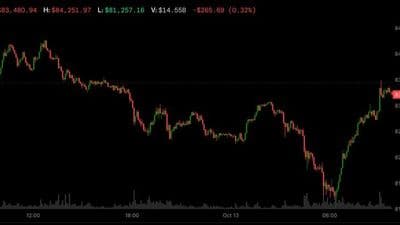
The cryptocurrency’s price hovered near $83,500, staying flat over the last 24 hours but climbing 8% in the previous 30 days. After spending the first half of 2026 below $65,000, Bitcoin has posted its strongest quarterly performance in years, prompting some analysts to argue that the bearish phase may be concluding.
Market Dynamics and the “Debasement Trade”
The shift coincides with a policy move by the U.S. Treasury to double the size of its liquidity-support buyback programme, a step that weakened the dollar and made non-yield-bearing assets like Bitcoin more attractive. Investors seeking a hedge against currency devaluation—a strategy dubbed the debasement trade—have once again turned to Bitcoin, echoing patterns seen in 2024 and 2025.
Potential Impact of Supply-Demand Imbalance
On-chain researcher Rei highlighted that a continued drop in exchange inventories, paired with steady or rising buying interest, could create a supply-demand mismatch favorable to price appreciation. The ongoing migration of Bitcoin to cold storage reinforces this narrative, as fewer coins remain in the market’s liquid pool.
Why it matters
A reduced pool of exchange-available Bitcoin may tighten market liquidity, amplifying price movements when demand shifts. If the current trend of moving coins off-exchange persists, it could support a longer-term upward trajectory for Bitcoin, especially as macro-economic factors keep the dollar under pressure.