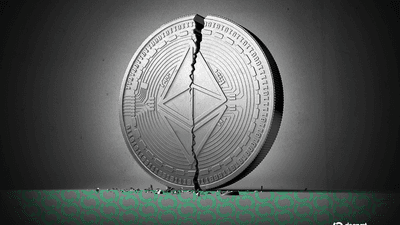
A leading Ethereum researcher has cautioned that rapid progress in artificial intelligence could soon compromise the cryptographic scheme securing most cryptocurrency wallets. He recommends a phased relocation of funds to newly created addresses that conceal public keys, a strategy he calls “bunker mode.”
AI breakthroughs raise new crypto threats
Recent developments from a major AI lab, including the release of hundreds of novel mathematical results, have demonstrated the capacity of machine-learning systems to tackle problems once considered intractable. In particular, the lab reported that a swarm of autonomous agents solved the Navier-Stokes equation in under four days. Such achievements suggest that AI may soon acquire the ability to exploit structural weaknesses in the mathematics underlying blockchain security.
Elliptic curve signatures under pressure
The majority of blockchain wallets rely on the elliptic curve digital signature algorithm (ECDSA) to verify ownership. While ECDSA has withstood scrutiny for decades, its reliance on algebraic properties makes it a potential target for sophisticated algorithmic attacks. The researcher notes that the rich internal structure of elliptic curves offers avenues for “fancy tricks” that could be leveraged by superintelligent systems, unlike hash functions which deliberately minimize such structure.
Recommended migration to fresh addresses
To mitigate exposure, the researcher advises a controlled, industry-wide shift of assets to newly generated addresses. Fresh addresses hide the public key behind a cryptographic hash, reducing the information available to an attacker. He stresses that the transition should start with large, sophisticated holders and be executed slowly to avoid market disruption. Additionally, any remaining balance should be moved after a transaction is signed, because signing reveals the public key and could open a window for exploitation.
Why it matters
If AI can indeed break ECDSA within months, the security model of most cryptocurrencies could be undermined well before quantum computers become viable. A successful attack would allow adversaries to derive private keys from publicly visible information, potentially leading to large-scale theft. By encouraging a pre-emptive migration to addresses that mask public keys, the community can buy time to develop and adopt more resilient cryptographic primitives, preserving confidence in blockchain assets.
Why it matters
The warning highlights a shift in the threat landscape from hardware-based attacks to software-driven, AI-powered exploits. Proactive measures such as the suggested address migration could mitigate immediate risks and provide a window for the ecosystem to transition to post-quantum or AI-resistant signature schemes. Failure to act promptly may expose billions of dollars in crypto holdings to novel forms of cryptographic compromise.