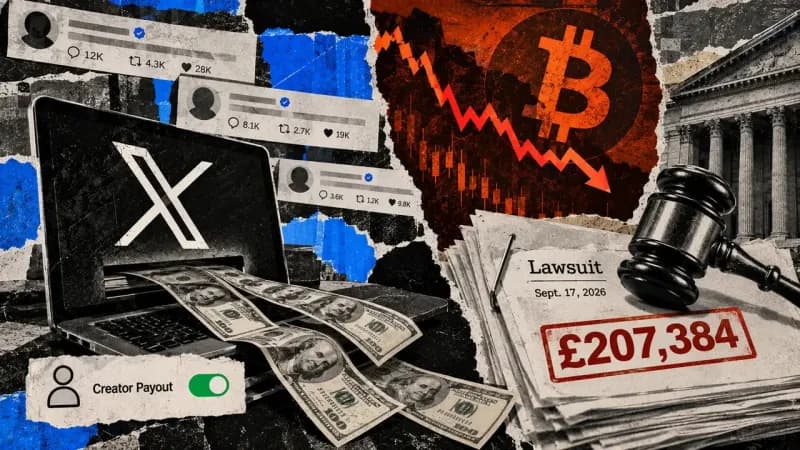
X runs a programme that compensates eligible creators when paying subscribers view their posts. Earnings are calculated from the attention each post receives, regardless of the subject matter. The model rewards the ability to attract eyeballs, not necessarily the accuracy or originality of the content.
Allegations of coordinated activity
In a filing submitted on 17 September, X claims that three individuals – identified as Vivek Kumar Sen, Zamyang Sherpa and an unnamed operator – operated a network of accounts that posted near-identical Bitcoin-related updates within seconds of one another. The complaint cites instances where the same message appeared on @Vivek4real_ and @TrendingBitcoin only 11 seconds apart, and points to overlapping device identifiers and payment records as evidence of a shared operation. X asserts that the coordination was designed to make the engagement look organic, allowing the accounts to qualify for creator payments. The suit does not allege any manipulation of Bitcoin’s market price or direct solicitation of purchases.
Potential impact on readers and platform integrity
When multiple verified accounts appear to echo the same announcement, a casual reader may assume the information comes from independent sources. This perception can influence decisions, especially in fast-moving markets where users act within minutes of seeing a post. X argues that such artificial amplification undermines both the credibility of genuine creators and the quality of the feed that it sells to advertisers and subscribers.
Changes to the payment program
Ahead of the lawsuit, X announced a transition to an Original Content Rewards framework. Existing participants can continue to earn under the old rules until 7 September, while applications for the new system opened on 8 September. The revised terms explicitly prohibit recycled headlines, lightly edited reposts and any engagement generated by bots or other non-authentic means. Payments will be calculated under X’s direct control, with the ability to withhold earnings if manipulation is detected.
Legal and commercial motivations
X’s general counsel, James Burnham, framed the action as a deterrent aimed at protecting the platform’s ecosystem. Recovering the disputed £207,384 not only reimburses the company but also signals that abusing the creator-payment programme carries financial consequences beyond a simple ban. By making the cost of cheating higher, X hopes to preserve trust among creators who invest time in original work and among users who rely on an un-biased timeline.
Why it matters
The case highlights the tension between social-media monetisation and the spread of low-effort, high-engagement content in the cryptocurrency space. As platforms experiment with paying creators for attention, clear rules and enforceable penalties become essential to prevent coordinated schemes that can distort information flow. The outcome may set a precedent for how other services handle creator incentives, especially where financial markets are involved.