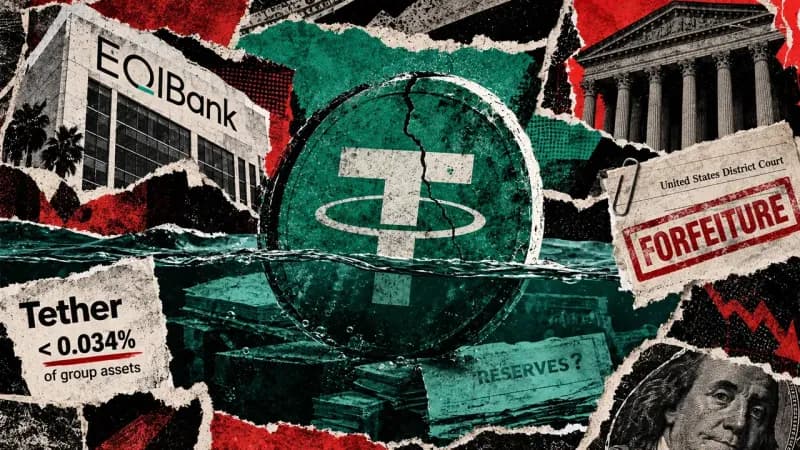
A recent U.S. forfeiture case involving about $84 million in bank accounts and stablecoin tokens has sparked renewed scrutiny of Tether’s reserve composition. While the issuer says the amount is a tiny fraction of its overall holdings, the lack of clarity on ownership and accessibility leaves market participants uneasy.
Seizure Overview
Federal authorities filed a civil forfeiture complaint in July that identifies roughly $83.03 million across three bank accounts and about 1.18 million USDT held at two addresses. Valued at a one-to-one rate, the combined figure approaches $84.2 million. The assets are linked to payment processor Capstone Limited, and the court documents list the accounts under Capstone’s name, not directly under Tether.
Tether’s Disclosed Exposure
In a statement to a payments news outlet on September 25, Tether disclosed that its exposure to the bank involved in the seizure amounts to under 0.034% of the assets held by the broader Tether group. The company did not provide a dollar figure or confirm that the seized balances form part of the USDT backing pool.
Reserve Calculations and Gaps
Tether’s most recent public attestation, covering the end of June, shows $187.75 billion in assets against $183.64 billion in liabilities, leaving a surplus of $4.11 billion. That report, however, does not reference any balance at the bank in question, making it impossible to determine whether the forfeited funds were earmarked for USDT redemption at the time of the seizure. The company’s disclosed percentage relates to the entire corporate group, while its reserve figures pertain to a specific issuing entity, creating a mismatch that obscures the true exposure.
Legal Context and Potential Impact
EQIBank, the institution holding the disputed accounts, sought a court order to retrieve the seized property, but its motion was denied. The denial does not resolve the broader forfeiture case or clarify who ultimately owns the assets. If the government’s claim prevails, Tether could lose access to the funds, potentially affecting its capacity to meet redemption requests. Conversely, if the assets are deemed unrelated to the USDT reserve, the impact on holders would be minimal.
Why it matters
The case underscores the regulatory risk that stablecoin issuers face when part of their cash or crypto holdings are tied to entities subject to government action. Even a relatively small amount, when linked to a high-profile token like USDT, can generate market concern about liquidity and transparency. The outcome will influence how investors assess the resilience of Tether’s backing and may shape future regulatory expectations for stablecoin reserve disclosures.


