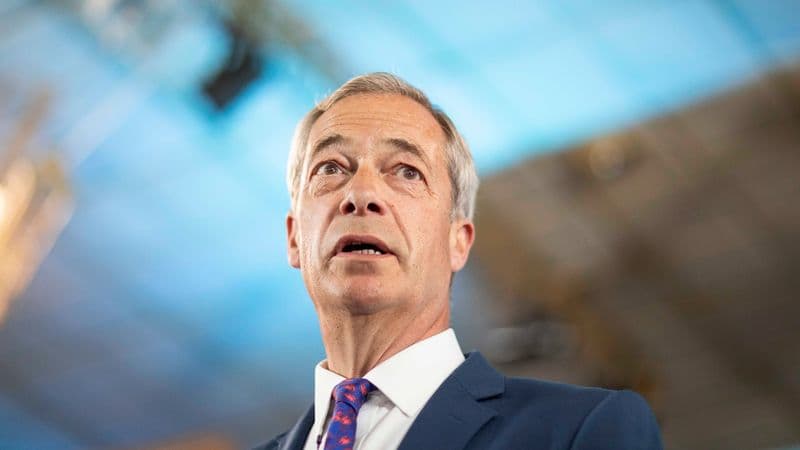
In a recent speech, the UK’s chancellor of the exchequer, John Healey, took aim at Reform Party leader Nigel Farage for his outspoken support of Bitcoin. The minister drew a parallel between Farage’s stance and the short-lived premiership of Liz Truss, suggesting that the former’s crypto-focused rhetoric could distract from responsible fiscal policy. Healey emphasized that his Labour government intends to advance the country through fiscal discipline, strong industry, and reliable public services.
Farage’s crypto narrative
Since entering Parliament in 2020, Farage has framed Bitcoin as a vehicle for personal liberty and a counter-weight to state-controlled money. He has repeatedly argued that a digital-currency-friendly environment would empower citizens and reduce governmental overreach. At a recent Bitcoin conference in Las Vegas, Farage pledged to lower capital-gains taxes on crypto assets and to push the Bank of England toward establishing a Bitcoin reserve should he become prime minister.
Funding controversy and police inquiry
The political spotlight has intensified following reports that Farage’s Reform Party received sizable contributions from cryptocurrency entrepreneurs, including Tether investor Christopher Harborne and BitMEX co-founder Ben Delo. The Metropolitan Police have opened an investigation into possible violations of rules governing overseas political donations. Reform Party officials have denied any wrongdoing and have pledged full cooperation with authorities.
Government’s fiscal message
Healey’s criticism was framed as part of a broader message about responsible budgeting. By invoking Liz Truss—whose 2022 mini-budget sparked market turmoil and a loss of confidence in the UK’s economic stewardship—Healey aimed to caution against policies he perceives as fiscally imprudent. He contrasted this with Labour’s commitment to “good work” and “strong industries,” underscoring a desire to steer the nation away from what he described as speculative financial experiments.
Public reaction
The remarks sparked a flurry of commentary on social media, with some users questioning the meaning of a “Bitcoin account” and others defending Farage’s libertarian perspective. Crypto-focused accounts on X highlighted the novelty of the term, while others pointed to the broader debate over the role of digital assets in political financing.
Why it matters
The clash between a senior Treasury official and a high-profile pro-crypto politician highlights the tension between emerging digital-asset advocacy and traditional fiscal conservatism in the UK. As law-enforcement agencies examine the legality of foreign crypto donations, the outcome could set precedents for how political parties engage with the cryptocurrency sector. Moreover, the discourse signals how mainstream politicians may need to balance innovation with accountability in the evolving financial landscape.


