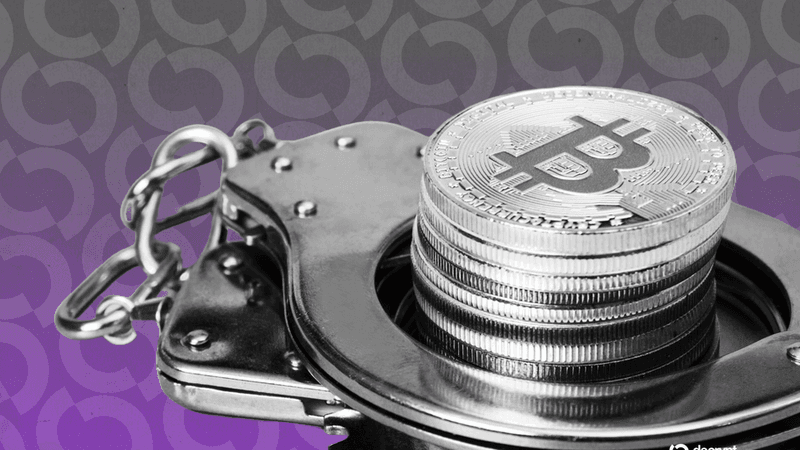
U.S. government-controlled wallets moved more than $100 million in cryptocurrency on Tuesday, sending 833.6 Bitcoin and 40,285 Binance Coin (BNB) to addresses identified as part of Coinbase Prime, the institutional trading and custody platform operated by Coinbase. The relocation has not been accompanied by any announcement of a sale, leaving the purpose of the transfer unclear.
Sources of the Seized Assets
The Bitcoin segment of the shipment can be split between two distinct forfeiture cases. Approximately 568.7 BTC are linked to the collapse of HashFlare, a mining contract scheme run by Estonians Sergei Potapenko and Ivan Turõgin, which prosecutors say defrauded investors of over $577 million. The remaining 264.9 BTC stem from the 2016 hack of the Bitfinex exchange, where thief Ilya Lichtenstein initially stole 119,754 BTC; the Justice Department later secured a court order to return 94,643 BTC to the exchange.
The BNB portion is tied to assets seized from Alameda Research, the trading firm associated with the failed FTX exchange. Those tokens were moved from an unlabeled address to another before arriving at Coinbase Prime.
Why Coinbase Prime?
Coinbase Prime serves both as a trading venue for large-scale investors and as a custodial vault. Depositing seized crypto there does not automatically signal an upcoming liquidation; the service can also act as a secure storage solution for government holdings. A similar deposit of $288 million in seized assets earlier this year was interpreted as custodial placement rather than a sale.
Context Within the Government’s Crypto Reserve
Arkham Intelligence estimates the U.S. holds roughly 325,000 BTC—about 1.6% of the total supply—valued near $27 billion, making it the largest sovereign holder. The Treasury’s Strategic Bitcoin Reserve, created by an executive order in March 2025, restricts the sale of forfeited Bitcoin, though assets tied to ongoing investigations remain outside that pool. BNB, by contrast, falls under a separate Digital Asset Stockpile and can be released only for specific purposes such as victim restitution or law-enforcement funding.
Market Implications
Historically, large government disposals have pressured Bitcoin’s price; a December 2024 transfer of 19,800 BTC to Coinbase sparked a 2% dip within a day. However, the current movement represents a modest fraction of the overall stash, and without a confirmed intent to sell, immediate market impact may be limited. Traders will continue to monitor the wallets for any signs of liquidation.
Why it matters
The relocation of seized cryptocurrency highlights the evolving role of U.S. authorities in managing digital-asset forfeitures. By routing assets through a major institutional custodian, the Treasury underscores both the need for secure storage and the potential for future use—whether for victim compensation, operational funding, or strategic reserve management—while keeping the market alert to possible supply shocks.