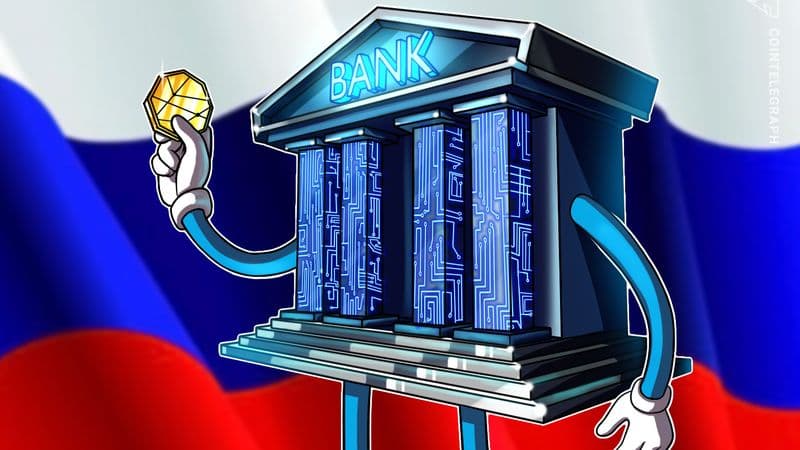
Russia’s central bank released its inaugural register of licensed crypto service providers on Tuesday, naming four exchange operators and five custodial firms. The list reflects the first practical implementation of a regulatory regime that took effect on 1 September.
Entities granted licences
The exchange operator roster includes T-Invest Lab, Zefir, Sistema-Crypto and VTB Bank. VTB also appears on the custodian side, which features Sberbank, Atomyze, Voltari, Cloud Infrastructure and the same VTB Bank. Sberbank’s inclusion marks the largest Russian bank’s entry into the digital-asset custody space.
Sberbank’s upcoming product launch
Sberbank announced that it has applied for custodian status and intends to debut crypto-related offerings on 1 December. The bank plans to make Bitcoin (BTC), Ether (ETH) and Tether (USDT) available through its existing online banking, investment and business platforms. This move positions Sberbank as a mainstream conduit for retail and institutional participants seeking exposure to the three assets.
Legislative backdrop
The registrations stem from a law signed by President Vladimir Putin in August, which established a formal framework for exchanges, custodians, brokers and investors. The statute assigns supervisory authority to the Bank of Russia while reaffirming the prohibition on using cryptocurrencies for payment of goods and services. By creating a clear licensing pathway, the legislation aims to bring greater transparency and state oversight to a previously informal market.
Industry implications
The official listings signal the Russian government’s willingness to integrate digital assets into the regulated financial system, albeit under strict controls. The involvement of major banks such as Sberbank and VTB could encourage broader institutional participation, while the limited number of approved operators suggests a cautious, top-down approach.
Why it matters
The launch of licensed exchanges and custodians provides a legal avenue for Russian users to trade and store cryptocurrencies, potentially boosting market liquidity and consumer confidence. Sberbank’s entry, backed by its extensive retail network, may accelerate mainstream adoption of Bitcoin, Ether and USDT within Russia. Moreover, the regulatory framework offers a template for other jurisdictions seeking to balance innovation with oversight, highlighting the evolving relationship between state authorities and the crypto ecosystem.