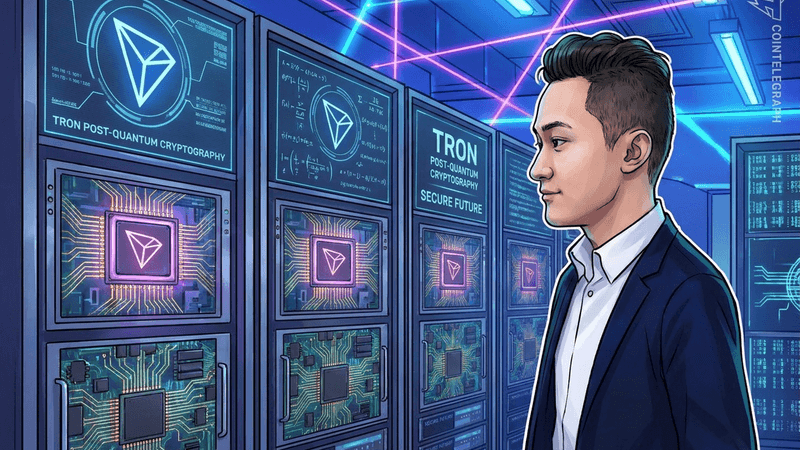
Tron’s founder confirmed that the network’s quantum-resistant cryptographic module has been deployed on its test environment. The rollout follows close monitoring of advances in quantum computing and artificial intelligence, with the intention to shift the feature to the live chain as soon as it is deemed ready. The move positions Tron as one of the few large-scale blockchains aiming to achieve quantum resistance before the so-called “Q-Day,” the point at which quantum computers could compromise current cryptographic standards.
Industry-wide push for quantum safety
The push for quantum-proof security is gaining momentum across the blockchain sector. Earlier this year, a consortium led by Strategy pledged $15 million to fund research on quantum defenses for Bitcoin. The Ethereum Foundation released a proposal outlining how accounts could transition to quantum-resistant cryptography, while Algorand announced a roadmap to introduce quantum-secure accounts by 2027.
AmericanFortress offers address-preserving protection
A security firm unveiled a cryptographic framework that can shield existing crypto wallets from future quantum attacks without requiring users to relocate funds, generate new keys, or alter their wallet addresses. The approach, detailed in a technical paper posted to the Cryptography ePrint Archive, has not yet undergone peer review but differs from many other proposals by preserving the current address format while adding a quantum-resistant layer.
What lies ahead for blockchain security
Developers are increasingly prioritising post-quantum solutions because the elliptic-curve algorithms that underpin Bitcoin, Ethereum and most other chains could become vulnerable if sufficiently powerful quantum computers emerge. Tron’s testnet activation demonstrates a concrete step toward mitigating that risk, while parallel efforts from other leading platforms suggest a broader industry movement toward safeguarding digital assets against a quantum future.
Why it matters
The activation of quantum-resistant cryptography on Tron’s testnet signals that major blockchain networks are transitioning from theoretical research to practical implementation. As quantum computing capabilities progress, the ability to protect user assets without disrupting existing wallet structures could become a critical factor in maintaining trust and continuity across the crypto ecosystem.