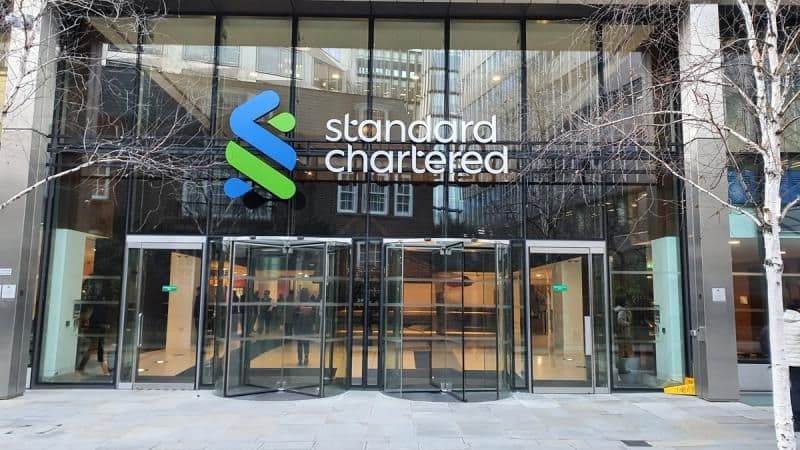
Standard Chartered’s Dubai operation has begun offering regulated custodial services for Ripple’s dollar-pegged stablecoin, RLUSD, on the XRP Ledger. The move adds a major global bank to the list of institutions providing secure storage for a digital asset that has been positioned for institutional use.
Institutional custody for RLUSD
The bank’s Dubai branch now holds RLUSD for eligible clients under a regulated framework. With roughly $450 billion in assets under management, Standard Chartered brings significant scale and oversight to the stablecoin’s custody infrastructure. The service complements the bank’s broader digital-asset strategy, which recently included a rollout of custodial solutions in Singapore and the acquisition of Zodia Custody earlier in the year.
Planned collateral integration with LMAX
Standard Chartered is also working with LMAX Group, an institutional venue for foreign-exchange and digital-asset trading, to enable RLUSD held at the bank to be used as collateral for trades on LMAX’s platform. Under the proposed arrangement, the stablecoin would remain in the bank’s custody while its value is pledged to support trading activity, eliminating the need for clients to transfer the token to the exchange. The integration is still pending completion of documentation, technical testing, and regulatory approvals, and has not yet gone live.
LMAX received $150 million in financing from Ripple in January to help embed RLUSD into its infrastructure. If the collateral link is finalized, RLUSD would gain a new pathway into the collateral pools that back institutional trading, extending its utility beyond settlement of payments or spot transactions.
Expanding the role of stablecoins in finance
By providing a regulated custodial solution and exploring collateral use cases, Standard Chartered is advancing the case for stablecoins as a core component of institutional finance. The bank’s involvement signals confidence that a tokenized USD can meet the risk-management and safeguarding standards required by banks, funds, and other large investors. The approach also separates custody from execution, allowing participants to retain control of assets while still leveraging their value for market activities.
Why it matters
The partnership between a systemically important bank and a major trading venue could accelerate the adoption of stablecoins for settlement and collateral across the financial sector. Offering regulated custody reduces a key barrier for institutions wary of custodial risk, while the collateral link promises greater efficiency for trading operations. Together, these developments may broaden the functional scope of digital-asset infrastructure and encourage other banks to explore similar services.