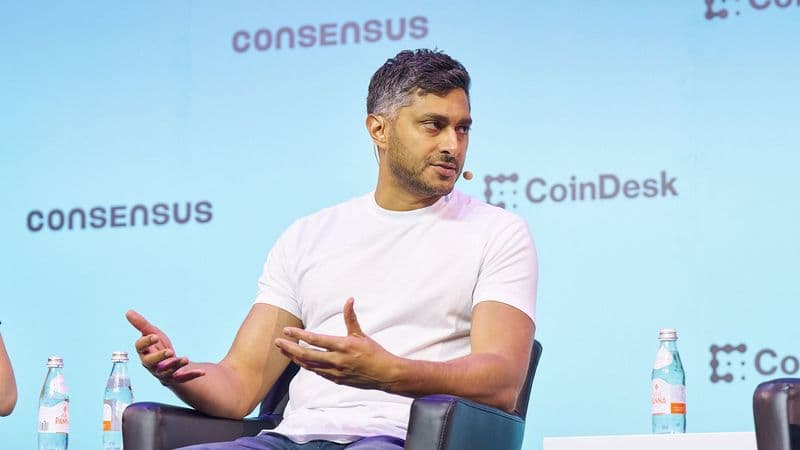
Payward, the Wyoming-based parent of Kraken, is channeling large-scale capital into a consolidated financial-services platform that goes well beyond its legacy crypto exchange.
Building a “one ledger” ecosystem
Payward’s leadership describes its goal as a single-ledger architecture that lets money and digital assets flow across a suite of products without the traditional maze of intermediaries. The vision is organised around four pillars: trading via Kraken, banking services, asset-management solutions and a business-to-business division called Payward Services. Together, these components share a common regulatory and balance-sheet framework, allowing the company to offer cards, lending, derivatives, tokenised equities and DeFi-compatible borrowing options to its roughly 6.6 million funded accounts, which collectively hold between $40 billion and $50 billion in assets.
Acquisitions and partnerships fill the gaps
To accelerate development, Payward has combined internal engineering with targeted purchases. It paid $1.5 billion for NinjaTrader to obtain a U.S. futures brokerage platform and the associated licences, followed by a $550 million transaction for Bitnomial, which added a regulated derivatives exchange, clearinghouse and brokerage capability. A pending European bank acquisition, reportedly a Lithuanian institution, would extend the firm’s reach on the continent.
In parallel, Payward is forging collaborations with established market participants. Nasdaq committed $100 million to support joint work on equity-token projects, with a launch slated for the second quarter of 2027. The London Stock Exchange is also exploring tokenised public equities, planning to list “xStocks” on its upcoming LSE 24 venue, subject to regulatory sign-off.
Opening the stack to external firms
Payward Services repackages the infrastructure originally built for Kraken—custody, liquidity, compliance, risk-management, payments and settlement—into a set of APIs that can be integrated by banks, fintechs, brokerages and other crypto platforms. At least 25 firms are developing products on this stack, with Hyperliquid named among the early adopters. This approach creates a distribution channel that does not rely on direct Kraken customers, enabling partner brands to deliver services powered by Payward’s backend while maintaining their own market presence.
Profitability and IPO outlook
Co-CEO Arjun Sethi emphasizes that Payward is already profitable and does not feel pressure to pursue an initial public offering. The firm views regulatory developments as a downstream effect rather than a prerequisite for growth, noting that Bitcoin has operated for nearly two decades without a dedicated market-structure bill.
Why it matters
Payward’s strategy signals a shift from operating a single exchange toward becoming a foundational layer for a wide range of financial products. By unifying trading, banking and asset-management functions under one regulatory and technological umbrella, the company aims to reduce friction, lower costs and attract a broader set of institutional and fintech partners. If successful, this model could reshape how crypto-related services are delivered, positioning Payward as a key infrastructure provider in the evolving digital-asset ecosystem.