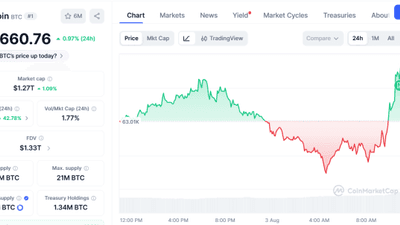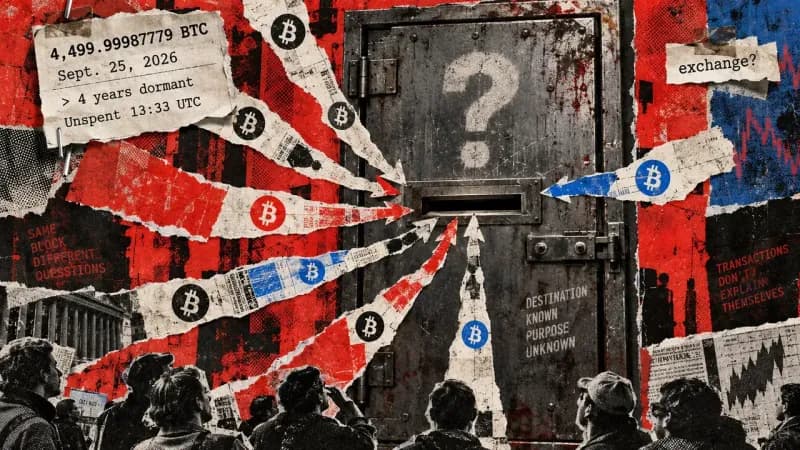
On September 25, 2026 at 02:30 UTC, a Bitcoin address combined eight inputs and sent 4,499.99987779 BTC to a single destination. At the time, Coinbase’s BTC/USD price ranged between $84,152.88 and $84,882.18, valuing the transfer at roughly $379 million to $382 million. The transaction paid a modest network fee of 1,303 satoshis and left the output unspent when checked later that day.
Address background
The largest input to the transaction originated on April 21, 2022, and had not moved for more than four years prior to the September transfer. Although the address was largely dormant, it received seven minor deposits between December 30, 2024 and September 11, 2026, each amounting to only a few hundred satoshis. In total, those deposits added up to 2,821 satoshis (0.00002821 BTC), underscoring that the bulk of the balance was a long-held principal.
Lack of sale evidence
The on-chain data reveals only the consolidation of the eight inputs into a single output; it does not disclose the identity of the receiving party, nor does it prove that the coins were sold or transferred to an exchange. A transfer of this size often prompts speculation about upcoming supply pressures, yet without a subsequent spend or external confirmation, any claim about a sale remains unsubstantiated. Future movements would become visible on the blockchain, but the motive behind the current transaction cannot be inferred from the ledger alone.
Market context
Large, dormant holdings periodically surface in blockchain analytics, drawing attention from traders who monitor potential influxes to exchanges. In this case, the entire 4,500-BTC output remained at a solitary address at the time of observation, and no immediate onward transaction was detected. Consequently, the move did not create an observable shift in circulating supply, and its impact on price dynamics remains speculative.
Why it matters
The consolidation highlights how substantial Bitcoin stores can reappear after years of inactivity, reminding market participants that on-chain signals must be interpreted with caution. Without corroborating evidence of a sale or exchange deposit, the transaction alone does not signal a change in market fundamentals, but it does illustrate the opacity surrounding the ownership of large, long-term holdings.