Duelbits, a platform that offers gambling services using cryptocurrencies, announced that it suffered a security breach that emptied its hot wallets of roughly $7 million. The incident was first highlighted by a blockchain-monitoring firm, which flagged large outflows from the casino’s wallets on Ethereum, BNB Chain, Tron and Bitcoin. Within minutes of the breach, the compromised wallets transferred a mix of tokens and coins to newly created addresses.
Scope of the breach
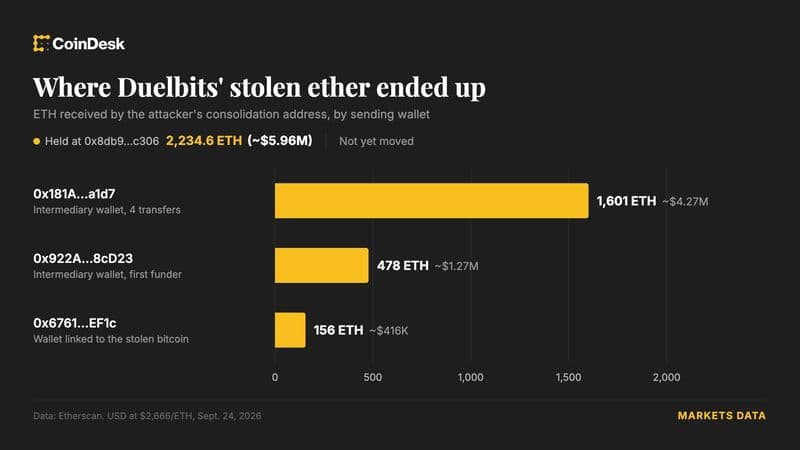
The compromised Ethereum wallet moved 836 ETH along with sizeable amounts of stablecoins – around 593,000 USDT, 97,000 USDC and 31,500 DAI – plus 12.4 billion SHIB. The Bitcoin hot wallet lost 8.1 BTC. After the initial transfers, the majority of the stolen assets were swapped into Ether and consolidated into a single address now holding about 2,234 ETH, valued at roughly $6 million at current prices. As of the latest blockchain scans, that address has not forwarded the funds elsewhere.
Duelbits’ response
Co-founder Joe posted on X that the platform is confirming the hack and that user balances remain protected. He indicated that the site will stay offline until the investigation concludes and the depleted hot wallets are replenished. The company issued a statement describing the incident as a “security incident” and emphasized that operations would resume only after remedial steps are completed.
Historical context
The method of compromise—unauthorized access to a private key—matches the technique used in a 2023 attack on Stake, the largest crypto casino by volume, which resulted in a $40 million loss. Such breaches highlight the persistent risk associated with keeping sizable funds in hot wallets that are directly accessible for transaction signing.
Implications for the sector
The Duelbits episode underscores the vulnerability of crypto-based gambling platforms that rely on hot-wallet architectures. While the platform assures users that their deposited funds are safe, the event may prompt operators to reassess their custodial strategies, possibly shifting more assets to cold storage or employing multi-signature solutions. Regulators and industry watchdogs could also use the incident to argue for stricter security standards across the rapidly expanding crypto-gaming landscape.
Why it matters
The theft not only represents a significant financial loss for the casino but also raises broader concerns about the security of on-chain gambling services. As more users entrust their crypto assets to such platforms, the need for robust key-management practices becomes critical. The incident may accelerate discussions around best-practice custodial controls and could influence future regulatory approaches to protect consumers in the crypto-gaming arena.