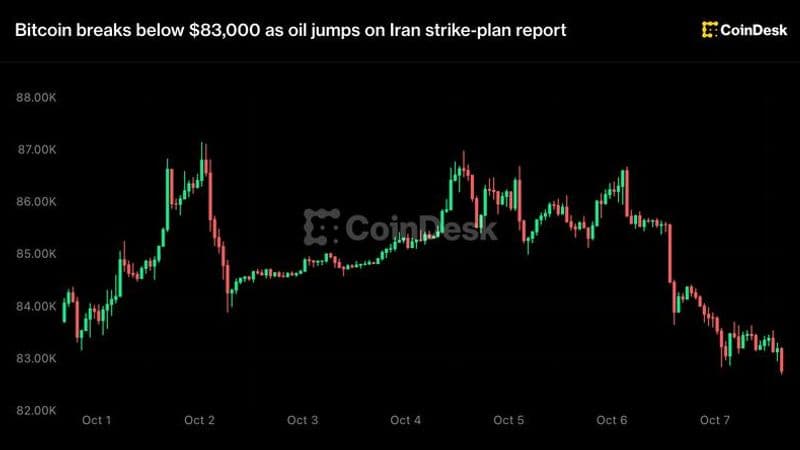
On the morning of 8 October 2026, Bitcoin slipped 1.6 percent to a price just under $82,800, crossing a technical level that analysts said could hasten a slide toward $80,000. The move coincided with a sharp rise in crude oil, as Brent futures climbed more than 2 percent to exceed $102 per barrel. The price jump followed a report that the White House had asked the Pentagon to explore strike options against Iran, adding to existing supply concerns from a storm that temporarily halted U.S. oil output and attacks by Houthi rebels on two Saudi airports.
The higher oil price lifted 10-year Treasury yields by two basis points, bringing the benchmark to 5.31 percent – its highest level since 2002. The combination of rising oil and yields exerted downward pressure on risk assets, including cryptocurrencies and global equities.
Impact on other cryptocurrencies
The broader crypto market mirrored Bitcoin’s decline. XRP recorded the steepest drop among major tokens, sliding nearly 4 percent to about $1.42. Ethereum fell 3 percent to roughly $2,570, while Dogecoin slipped 3 percent to just under nine cents. Other assets such as HYPE and Solana each lost more than 2 percent, and Zcash edged down by less than 1 percent. Binance Coin and TRON were the only tokens that managed modest gains, each rising under 1 percent.
Leveraged positions and liquidations
Data from CoinGlass indicated that approximately $550 million in leveraged crypto positions were liquidated during the session, the majority of which were long bets that anticipated higher prices. The rapid unwind of these positions amplified the downward momentum in Bitcoin and other cryptocurrencies.
Broader market context
Equity markets also retreated after recent record highs. U.S. benchmarks slipped a day after closing at all-time peaks, and Asian indices fell roughly 1 percent. The MSCI All-Country World Index dropped 0.2 percent, moving further away from the record level it had approached earlier in the week.
Analysts note that Bitcoin’s two consecutive losing days have both coincided with rising oil prices and higher yields. A retreat of Brent below the $100 mark could relieve some of the pressure on risk assets, potentially stabilising the crypto market.
Why it matters
The breach of the $83,000 threshold reopens the possibility of a rapid descent toward the $80,000 support zone, a level that could trigger further risk-off sentiment across both crypto and traditional markets. The episode underscores how geopolitical developments and commodity price shocks can quickly translate into heightened volatility for digital assets, especially when leveraged exposure is substantial. Monitoring oil prices, Treasury yields, and the status of leveraged positions will be critical for assessing the near-term trajectory of Bitcoin and the wider crypto ecosystem.