Glassnode’s latest on-chain analysis shows that the 30-day period ending 5 October saw fresh purchases of Bitcoin – from corporate treasuries, stablecoin-linked growth and inflows into U.S. spot Bitcoin ETFs – total roughly $4.9 billion. While sizable, this amount represents under 40% of the total increase in Bitcoin’s realized market value for the same span.
Realized Capital Expansion
During the same window, Bitcoin’s realized cap – the aggregate value of each coin based on its most recent on-chain price – grew by $12.8 billion. Existing holders were responsible for about 60% of that rise, indicating that the bulk of the upside came from coins already in the market being sold at higher prices rather than from fresh buyers.
Short-Term Holder Profit-Taking
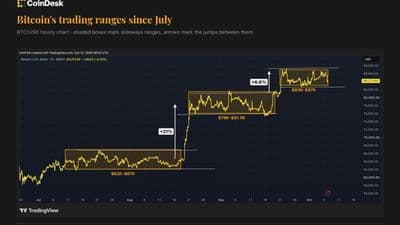
The data also highlights a surge in profit-taking among short-term participants. Since 21 September, Bitcoin attempted to break above $87,000 on four occasions, each time meeting strong sell pressure. When the price finally nudged past $85,000, roughly 86% of the coins transferred to exchanges originated from holders with positions younger than 155 days – the highest proportion recorded in the past year. Typically, short-term holders contribute less than 40% of daily exchange inflows.
Market Context
Earlier rallies in 2024 and 2025 displayed a similar mix of new inflows and on-chain activity, but those episodes were accompanied by substantially larger capital injections, especially after the launch of Bitcoin spot ETFs in January 2024. Current conditions differ, with modest fresh capital and a reliance on existing participants to sustain price momentum. As of the latest quote, Bitcoin hovered around $83,000, marking a 1% decline for the month.
Why it matters
The divergence between modest new money and robust realized-cap growth suggests that Bitcoin’s recent price resilience is increasingly dependent on the willingness of current holders to trade at higher valuations. Should short-term profit-taking intensify or fresh inflows wane, the market could face heightened volatility, underscoring the importance of monitoring both on-chain activity and external capital sources.