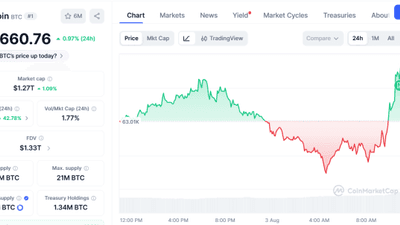
U.S. government bond yields surged this week, with the benchmark ten-year rate climbing to 5.22% and the thirty-year reaching a 22-year peak near 5.51%. The rise pushes borrowing costs to levels not seen since the mid-2000s and offers investors a risk-free return above five percent. Despite this, Bitcoin has remained confined to a relatively narrow band between roughly $83,000 and $85,000 after retreating from a recent high close to $87,000.
Analysts note that Bitcoin has accumulated about a 22% gain since late August, even as real yields on Treasuries have risen by roughly 50 basis points. The persistent climb in risk-free rates challenges Bitcoin’s appeal, as the cryptocurrency provides no yield while Treasury bonds now deliver a solid coupon.
Leverage Contraction in Bitcoin Derivatives
The most noticeable market reaction has been a sharp contraction in leveraged Bitcoin positions. Data from several major exchanges show that total open interest fell from about $12 billion to $10.3 billion over a three-day span, erasing roughly $1.7 billion of exposure. This represents a 14% reduction in leveraged bets, compared with a modest 2% dip in the spot price over the same period.
The decline was broadly distributed across platforms, with the largest drops occurring on Gate.io and Binance. While the data cannot pinpoint whether long or short contracts were primarily closed, the disproportionate shrinkage of leverage relative to price suggests that traders are scaling back risk without triggering a cascade of liquidations.
Market Sentiment and Future Tests
Higher Treasury yields also alter the relative attractiveness of Bitcoin within multi-asset portfolios. Some macro strategists argue that a 5% ten-year yield provides bond investors with a comfortable buffer, meaning a modest rise in rates could still generate a near-12% return, while a further increase to 6% would only modestly dent bond performance. This asymmetry raises Bitcoin’s opportunity cost, as the digital asset lacks any income stream.
Nevertheless, a number of investors still view Bitcoin as a core holding alongside commodities, citing its diversification benefits. The next critical data points will be the upcoming personal consumption expenditures (PCE) inflation report and the September employment figures. Strong numbers could encourage policymakers to keep tightening, potentially pushing yields higher and testing Bitcoin’s resilience once more.
Why it matters
The interaction between soaring Treasury yields and Bitcoin’s price stability highlights the growing interdependence of crypto assets and traditional financial markets. A continued rise in risk-free rates could make holding non-yield-bearing assets less attractive, prompting further deleveraging in crypto derivatives and potentially dampening price momentum. Conversely, if yields retreat, the pressure on Bitcoin may ease, allowing the cryptocurrency to regain its upward trajectory. Market participants will be watching both bond markets and macro data closely to gauge the durability of Bitcoin’s current range.