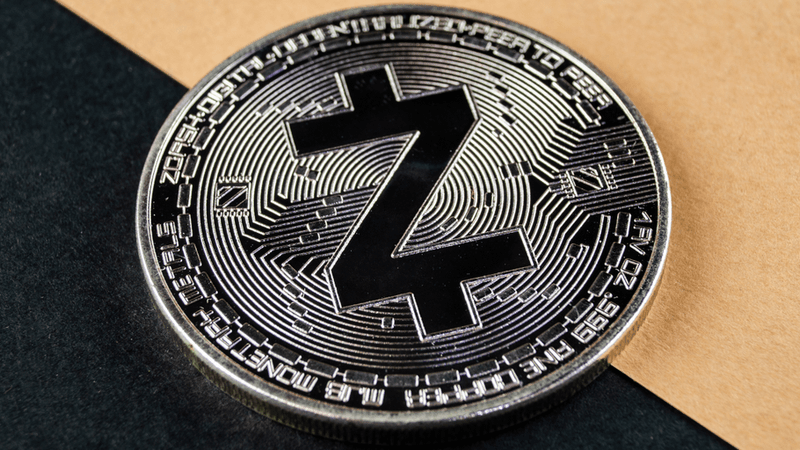
Zcash’s development team, operating under the name Zakura, announced a roadmap that combines post-quantum signature opcodes with address-rotation and private information retrieval (PIR) to protect transparent transactions from emerging AI and quantum threats.
Post-quantum signature opcodes
Zakura expects new low-level opcodes to land in the Zcash protocol in January. These opcodes will allow the network to verify hash-based signatures, specifically Winternitz One-Time Signatures (WOTS), which do not rely on elliptic-curve mathematics. By moving away from ECDSA-style signatures, Zcash aims to mitigate the risk that AI-driven mathematical breakthroughs or future quantum computers could compromise key security.
Rotating transparent addresses
Transparent addresses in Zcash expose a public-key hash that becomes visible when the address is spent. Zakura’s design will rotate to a fresh address after every transaction, keeping the public key concealed. This rotation, however, creates a linkage problem when wallets query balance information across many addresses.
Private information retrieval in Vizor
To prevent servers from learning which addresses belong to a single user, the team is integrating PIR into the Vizor wallet. PIR enables a client to retrieve balance data without revealing the specific queries, effectively breaking the linkability introduced by address rotation. Users can enable the feature by toggling “private queries” in the wallet’s settings.
Scope and activation timeline
The proposed changes apply solely to Zcash’s transparent pool; shielded transactions, which already hide sender, recipient, and amount, remain unaffected. No definitive network-wide activation date has been announced, and the upgrade will initially rely on client-side adoption through wallets like Vizor.
Industry context
The initiative follows warnings from Ethereum researcher Justin Drake, who termed the situation “bunker mode,” suggesting that AI-driven advances could break current ECDSA signatures within months. Ethereum co-founder Vitalik Buterin has echoed concerns, noting the plausibility of such breakthroughs within two years. Zcash’s move comes amid rising institutional interest, including a proposed U.S. ETF linked to the Winklevoss twins and Europe’s first Zcash ETP, as well as a recent upgrade that tripled the speed of private payments.
Why it matters
By introducing quantum-resistant signatures and privacy-preserving balance queries, Zcash seeks to future-proof its transparent transaction layer against imminent cryptographic risks. If successful, the approach could set a precedent for other blockchain projects facing similar AI and quantum challenges, while also reinforcing Zcash’s appeal to institutional investors seeking long-term security assurances.