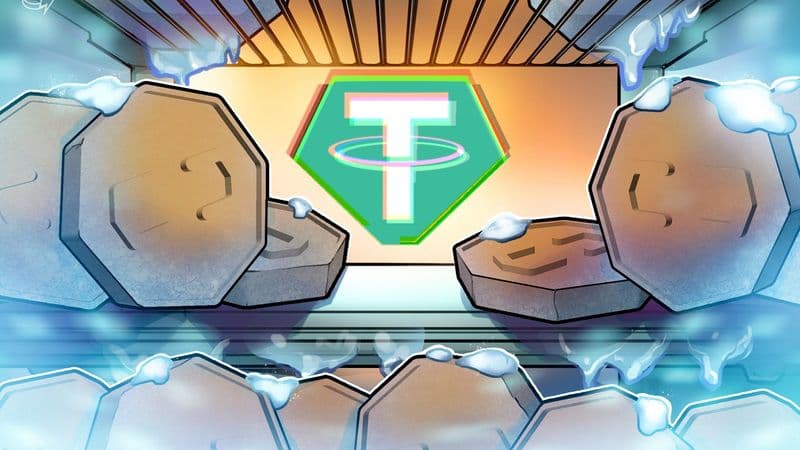
Technical co-founder Chad Barraford says Tether unexpectedly blacklisted four THORChain vault addresses, immobilising around $1.45 million worth of USDT before unlocking them a few hours later.
Background on THORChain and USDT
THORChain is a cross-chain liquidity network that enables users to swap assets without custodial intermediaries. USDT, issued by Tether, is one of the most widely used stablecoins on the platform, providing a fiat-pegged bridge for traders.
Details of the Freeze
On a Friday, Barraford posted on X that Tether had placed the THORChain vaults on a blacklist, halting all transactions involving roughly 1.45 million USDT held in four wallets. The freeze lasted about two hours, after which Tether removed the restriction and normal trading resumed. Barraford noted that THORChain had not received any prior communication from Tether and was seeking clarification, suggesting the action might have been an error or misunderstanding.
Legal Context and Recent Litigation
The incident follows a series of legal actions against Tether alleging similar freezes. Earlier in the week, Conduit Technology sued the stablecoin firm, claiming $2.76 million of USDT was frozen in a wallet linked to a Brazilian investigation. Additionally, two Thai nationals filed a lawsuit in August asserting that $42.4 million of USDT was locked after an informal request from U.S. Homeland Security Investigations.
Industry Reaction
While no official statement from Tether was available at the time of reporting, the episode has heightened scrutiny of the firm’s control over stablecoin flows. Market participants rely on the predictability of USDT, and unexplained interruptions can affect confidence in both the token and the platforms that depend on it.
Why it matters
The brief but opaque freeze underscores the power that stablecoin issuers wield over decentralized ecosystems. Unanticipated restrictions can disrupt liquidity, affect trading strategies, and raise regulatory questions about the transparency and accountability of off-chain actors influencing on-chain activity. As lawsuits accumulate, stakeholders may push for clearer governance frameworks to mitigate similar disruptions in the future.