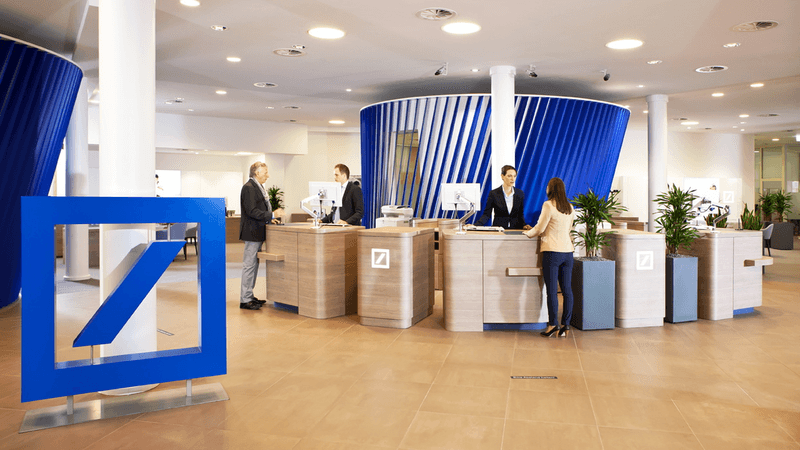
Deutsche Bank is set to introduce a Bitcoin custody product in the next few weeks, aiming first at its European corporate and institutional base. The bank also intends to broaden the platform to Asian customers sometime next year.
Service Details
The upcoming custody solution will initially hold Bitcoin and other leading digital coins. After establishing the core storage capability, Deutsche Bank plans to add features that let clients transfer funds to and from stablecoins. The offering is being built for the bank’s roughly 28 million customers, with rollout dependent on final regulatory approvals.
Timeline and Expansion
The bank announced its intent to launch the service in September, stating that the launch would proceed once the relevant supervisory steps were completed. A senior corporate-bank executive, Gerald Podobnik, emphasized that the broader financial ecosystem must provide "tokenized or blockchain solutions" to stay competitive. The Asian rollout is slated for the following year, positioning Deutsche Bank alongside peers that are expanding digital-asset services beyond their home markets.
Industry Context
Deutsche Bank joins a growing list of large financial institutions that have either begun or announced crypto-custody operations in the past year and a half. U.S. banks such as BNY Mellon, State Street and Citigroup, as well as Asian-focused lenders like Standard Chartered, have each disclosed plans to hold digital assets for clients. BNY Mellon became the first major U.S. bank to provide such a service in 2022, setting a precedent that European banks are now following.
Why it matters
The entry of a major German bank into Bitcoin custody signals further mainstream acceptance of digital assets by traditional finance. By adding stablecoin movement tools after the initial launch, Deutsche Bank is preparing to support a wider range of tokenized transactions. The planned Asian expansion underscores the global nature of the emerging crypto-custody market, suggesting that institutional demand for secure digital-asset storage is becoming a regular part of banking services worldwide.