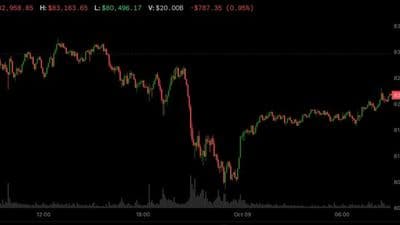
A sharp sell-off hit the leading digital assets on Thursday, pushing Bitcoin under the $81,000 mark and dragging Ethereum close to $2,400. Within hours, the market steadied; Bitcoin reclaimed levels above $82,000 and Ethereum nudged back toward $2,500. The broader top-ten index registered declines on seven of the ten assets, with Zcash, NEAR and Pump.fun each falling more than 10% in a single session. Despite the turbulence, the overarching bullish narrative for the cycle—ranging from institutional on-chain adoption to tokenisation—remains intact, framing the dip as a corrective pull-back rather than a systemic collapse.
Liquidity stress and long liquidations
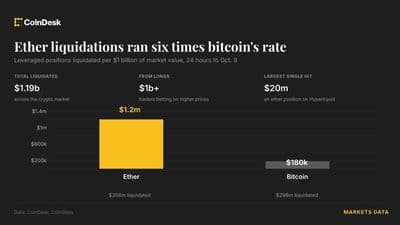
Over the past 24 hours, liquidations approached the $1 billion threshold, erasing a large portion of leveraged long exposure. Ethereum-linked longs bore the brunt of the unwind, reflecting the shift in funding rates that turned negative mid-week for the first time in months. The surge in downside bets compounded the price drop, as traders added to bearish positions instead of closing out. Such rapid unwinding underscores the thinness of the market: price moves are now occurring with diminishing fresh capital inflows.
Institutional flows and regulatory developments
Both Bitcoin and Ethereum exchange-traded funds continued to see outflows, with the former shedding roughly $245 million and the latter losing about $72 million on Thursday. The cumulative net outflow for Bitcoin ETFs turned negative for October, totaling around $400 million. In parallel, a government-controlled wallet transferred $1.01 billion of Bitcoin seized after the Bitfinex hack to a new, unlabelled address, a move that does not appear to be aimed at immediate liquidation given the 2025 executive order prohibiting the sale of strategic reserve holdings. Additionally, a custodial dispute emerged as two entities linked to market-maker DWF Labs sued BitGo in London, alleging a $141 million breach of token-locking agreements.
Ecosystem updates
On the Solana side, the platform’s largest exchange, Orca, combined forces with the lender Loopscale to create a New York-based entity named Formation. The new firm intends to finance projects across AI, energy, robotics and defence, and plans to operate a tokenised stock venue under the latest SEC framework. Complementing this, tokenisation firm Securitize launched twelve U.S. equity tokens on Solana, covering names such as Apple, Nvidia and Tesla. Meanwhile, Pump.fun introduced a "Custom Pairs" feature, allowing any Pump token to be paired with an arbitrary counterpart, effectively routing purchases through the original token first. Lastly, Vitalik Buterin warned that AI-driven techniques could compromise current quantum-resistant cryptography within two years, suggesting a shift toward hash-based schemes.
Why it matters
The rapid price swing, coupled with massive long liquidations, highlights the fragility of current market liquidity and the importance of risk management for leveraged participants. Persistent outflows from crypto ETFs signal a cautious stance among institutional investors, even as tokenisation initiatives expand on fast-growing chains like Solana. Together, these dynamics shape the near-term outlook for both price stability and the broader adoption of blockchain-based financial products.