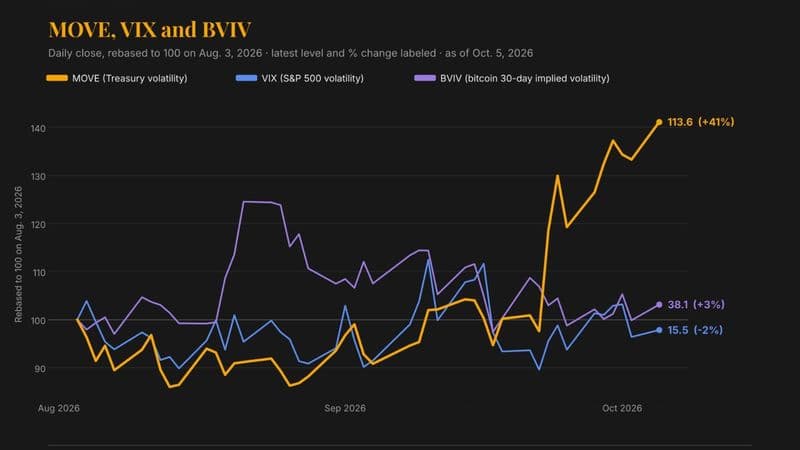
The ICE BofA U.S. Bond Market Option Volatility Estimate, known as the MOVE index, has been climbing sharply. After a 46% surge in June, the reading now hovers around 116, a level not seen since March and the highest since April 2025. The index measures the expected month-ahead movement in Treasury yields across the 2-, 5-, 10- and 30-year curves, with the 10-year segment carrying the most weight.
Corporate borrowing feels the pressure
Higher volatility in Treasuries is already spilling into the corporate bond arena. According to data from the Cboe, volatility for both investment-grade and high-yield bonds leapt from the bottom of their percentile ranges just two weeks ago to the 79th and 84th percentiles respectively. The rise in risk premiums suggests that lenders are demanding more compensation for perceived uncertainty.
Bitcoin and equity markets remain muted
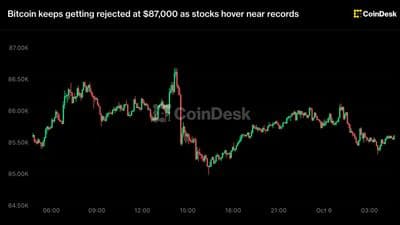
Despite the turbulence in the bond sector, Bitcoin’s price action and the S&P 500’s volatility gauge (the VIX) have stayed near their year-to-date lows. Historical analysis shows that Bitcoin’s daily returns do not closely follow the MOVE index over 60- or 90-day periods. Nonetheless, analysts have warned that sudden spikes in Treasury volatility can negatively affect Bitcoin, with the size of bond moves being more consequential than the direction of yields.
Current market backdrop
Steady inflows into Bitcoin exchange-traded funds, a decline in large-scale crypto deposits on exchanges, and supportive regulatory signals continue to underpin the cryptocurrency’s bullish narrative. Meanwhile, equity markets have been buoyed by easing pressure on longer-dated bonds and lower oil prices, allowing European stocks to extend recent rally gains.
Why it matters
The divergence between soaring bond-market volatility and the calm in Bitcoin and equities may be temporary. If the MOVE index breaches its recent resistance around 140 points—a level last seen during heightened U.S.–China trade tensions—market participants could see a broader shift in risk appetite. Such a move would likely raise volatility across asset classes, testing the resilience of both crypto and traditional equity holdings.