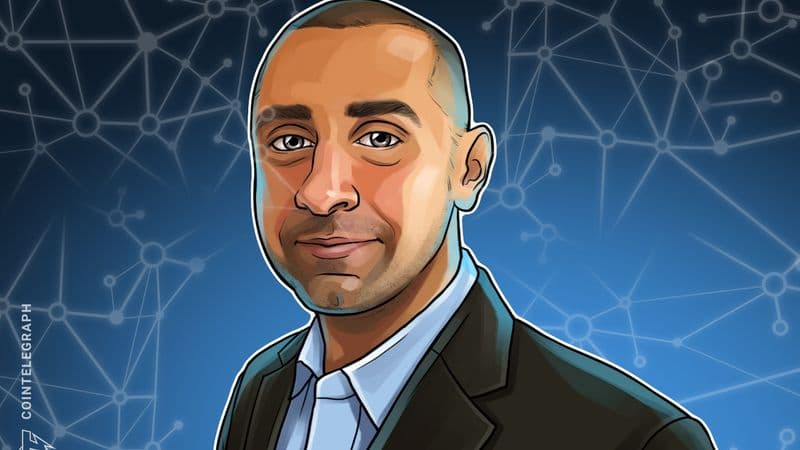
Balaji Srinivasan’s venture, Network School, completed its purchase of the decentralized social network Farcaster and immediately introduced a set of retroactive bans aimed at enforcing a newly-minted code of conduct.
Acquisition and rebranding
Network School announced on Thursday that it had taken control of Farcaster from its previous owner, Neynar, and would operate the service under the name Network State Protocol. The change marks the second ownership transition for the platform within the current year. Co-founder Dan Romero previously reported that Farcaster counted roughly 250,000 active users each month as of December 2025.
Immediate enforcement actions
Shortly after the announcement, a number of participants reported that their accounts were switched to a read-only state because earlier posts were deemed to violate the freshly introduced regulations. Among those cited was a former Farcaster engineer, according to a source familiar with the situation. Critics, including former Eigen Labs ecosystem lead Kunal Gandhi, argued that retroactively penalising historical content contradicts the principles of decentralised platforms.
Governance framework
Srinivasan described the new direction as an effort to forge a "Singapore of social media," a community built on a shared set of behavioural standards. Users can opt into a social smart contract that authorises the core team to define and enforce those standards. The accompanying Network Code categorises infractions as digital felonies, misdemeanours, or minor violations, with corresponding consequences ranging from warnings to temporary suspensions and permanent bans.
Both artificial-intelligence tools and human reviewers examined millions of posts to decide which accounts should be restricted, and an appeals mechanism has been put in place for affected users. The system also promises incentives for constructive contributions—such as teaching, project sharing, and civil disagreement—though the exact nature of those rewards has not yet been disclosed.
User options and protocol openness
While the application layer now operates under the new contract, the underlying Farcaster protocol remains open source. Participants who decline to accept the contract retain read-only access to the main client, preserving their cryptographic keys, balances, follower lists, and post history. This design allows them to migrate to alternative clients, a feature Srinivasan framed as "decentralised democracy."
Long-term vision
Beyond digital moderation, Network School envisions translating the online community into physical gatherings, pop-up events, and eventually full-scale startup cities or network states. The move follows recent regulatory setbacks for Balaji’s other projects, including the revocation of a Malaysian licence for Forest City and a subsequent plan to establish a campus in Kazakhstan.
Why it matters
The overhaul of Farcaster illustrates a broader trend of applying formal governance structures to decentralised social platforms. By retroactively applying rules and tying participation to a smart contract, Network School is testing whether a blend of AI moderation, incentive mechanisms, and open-source resilience can sustain a large-scale community without sacrificing the core tenets of decentralisation. The outcome could influence how future social protocols balance freedom, accountability, and economic incentives.